In Japan, the expression of congratulations transcends mere words; it is a cultural art form that reflects deep respect and heartfelt emotion. The Japanese language comprises various phrases and gestures that convey well-wishes for significant life events such as weddings, graduations, and new births. Understanding how to properly convey congratulations in Japanese can enrich interpersonal relationships and enhance cultural appreciation.
When we think of congratulations in Japanese, we often consider the traditional phrases that have been passed down through generations. These phrases are not only linguistically unique but also culturally significant, as they often come with specific customs and practices associated with them. This makes learning about them an enlightening journey into Japan's rich cultural tapestry.
As globalization continues to bridge cultural gaps, more people are eager to learn how to express congratulations in Japanese. Whether you are planning to attend a Japanese wedding, celebrate a friend's promotion, or simply wish to connect with Japanese friends and family, mastering the art of congratulations can make your sentiments resonate more deeply.
What Are Some Common Ways to Say Congratulations in Japanese?
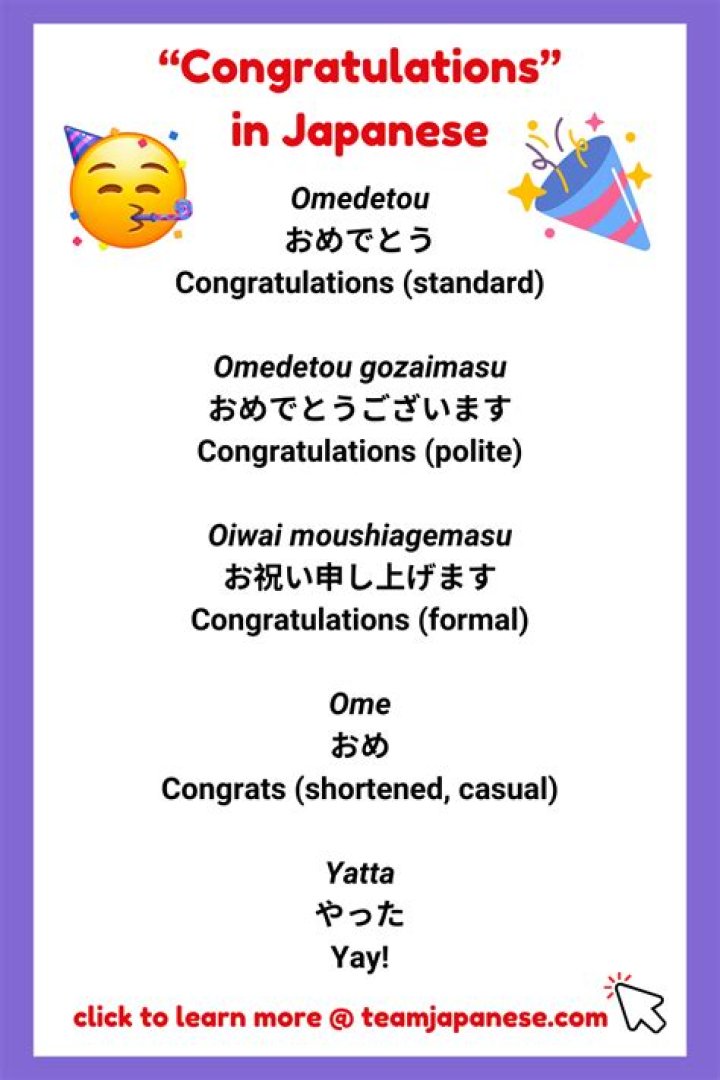
In Japanese, the most common phrase for congratulations is "おめでとう" (omedetou). This versatile expression can be used in various contexts, from casual greetings among friends to more formal occasions. Here are some variations:
- おめでとうございます (omedetou gozaimasu) - A more formal way of saying congratulations.
- おめでとう! (omedetou!) - A casual and friendly expression.
- ご卒業おめでとう (go sotsugyou omedetou) - Congratulations on your graduation.
- 結婚おめでとう (kekkon omedetou) - Congratulations on your marriage.
Why Is Saying Congratulations Important in Japanese Culture?
In Japanese culture, expressing congratulations is more than just a polite gesture; it is a way to foster relationships and build community. Here are a few reasons why it holds such importance:
- Strengthening Bonds: Celebrating milestones together enhances social connections.
- Cultural Norms: Congratulations are part of a broader set of social etiquette that emphasizes respect and consideration.
- Reciprocal Gratitude: Acknowledging others' successes creates a cycle of support and appreciation.
What Are Some Cultural Practices Associated with Congratulations?
Besides verbal expressions, congratulations in Japan often come with specific customs and rituals. Here are some notable practices:
- Gift-Giving: It is customary to present a gift, known as "お祝い" (oiwai), during celebratory events.
- Cards: Sending congratulatory cards, often adorned with traditional designs, is a common practice.
- Ceremonial Practices: Events like weddings and graduations may include specific ceremonies that emphasize congratulations.
How Do You Personalize Congratulations in Japanese?
Personalizing a congratulatory message adds a special touch that shows thoughtfulness. Here are some tips for making your congratulations more personal:
- Include the person's name: This adds a personal touch.
- Reference the specific achievement: Acknowledging the person's hard work makes your message more meaningful.
- Use a heartfelt tone: Your sincerity will shine through in the message you choose.
Who Are Some Notable Figures Celebrated in Japanese Culture?
In Japan, various figures have made significant contributions to society, and their achievements are often celebrated. Here, we provide a brief overview of one such figure:
| Name | Born | Occupation | Achievements |
|---|---|---|---|
| Hayao Miyazaki | January 5, 1941 | Animator, Director, Producer | Founder of Studio Ghibli, Academy Award Winner |
How Are Congratulations Expressed in Japan's Entertainment Industry?
In the realm of entertainment, congratulatory messages play a vital role, especially during award ceremonies, film premieres, and celebrations of artistic achievements. For instance, when a film directed by Hayao Miyazaki wins an award, fans and fellow creators alike express their congratulations through social media, messages, and gifts.
What Is the Role of Social Media in Sending Congratulations?
In today's digital age, social media platforms have transformed how congratulations are expressed. Here are some aspects to consider:
- Instant Communication: Social media allows for immediate sharing of congratulatory messages.
- Visual Elements: Adding images, GIFs, or videos can enhance the emotional impact of your message.
- Broad Reach: With a few clicks, your congratulations can reach a wide audience, making celebrations even more communal.
How Can You Learn More About Japanese Expressions of Congratulations?
For those interested in deepening their understanding of Japanese culture and language, here are some recommendations:
- Language Classes: Enrolling in Japanese language courses can provide valuable insights.
- Cultural Workshops: Participating in workshops can enhance your appreciation for Japanese customs.
- Online Resources: Websites and apps dedicated to language learning can offer lessons on cultural nuances.
Conclusion: The Heartfelt Significance of Congratulations in Japanese Culture
In conclusion, the expression of congratulations in Japanese is not merely a formality; it embodies a deep-rooted cultural significance that fosters relationships, builds community, and celebrates individual achievements. Whether you are saying "おめでとう" (omedetou) to a friend, colleague, or loved one, your words carry the power to uplift and inspire. Embracing this cultural aspect not only enriches your understanding of Japan but also enhances the connections you share with those around you.
Exploring The World Of Hammy_TV: Your Ultimate Guide
Unveiling The Doja Cat Towel: A Unique Blend Of Style And Comfort
Unveiling The Truth: The Story Behind Elvis Autopsy Photos